A world, not a menu
Six islands with terrain, roads, buildings and vegetation. You walk with a joystick, or tap the ground to go there.
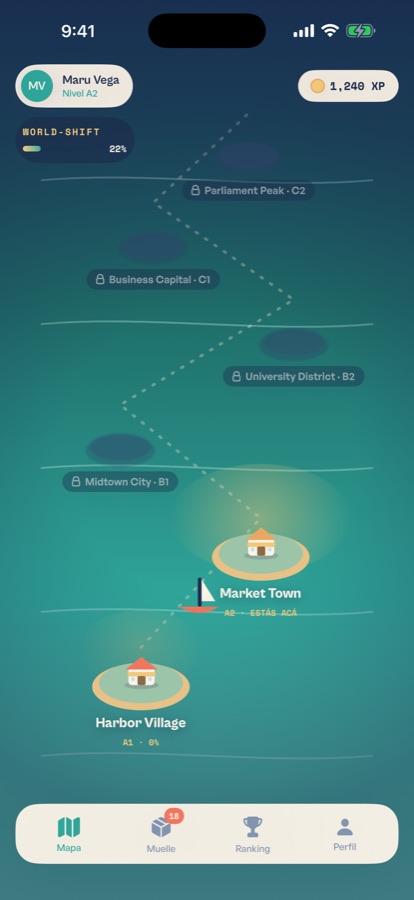
Anglia is an archipelago of six islands, A1 to C2. You walk, you talk to the people who live there, and the language happens instead of being studied.
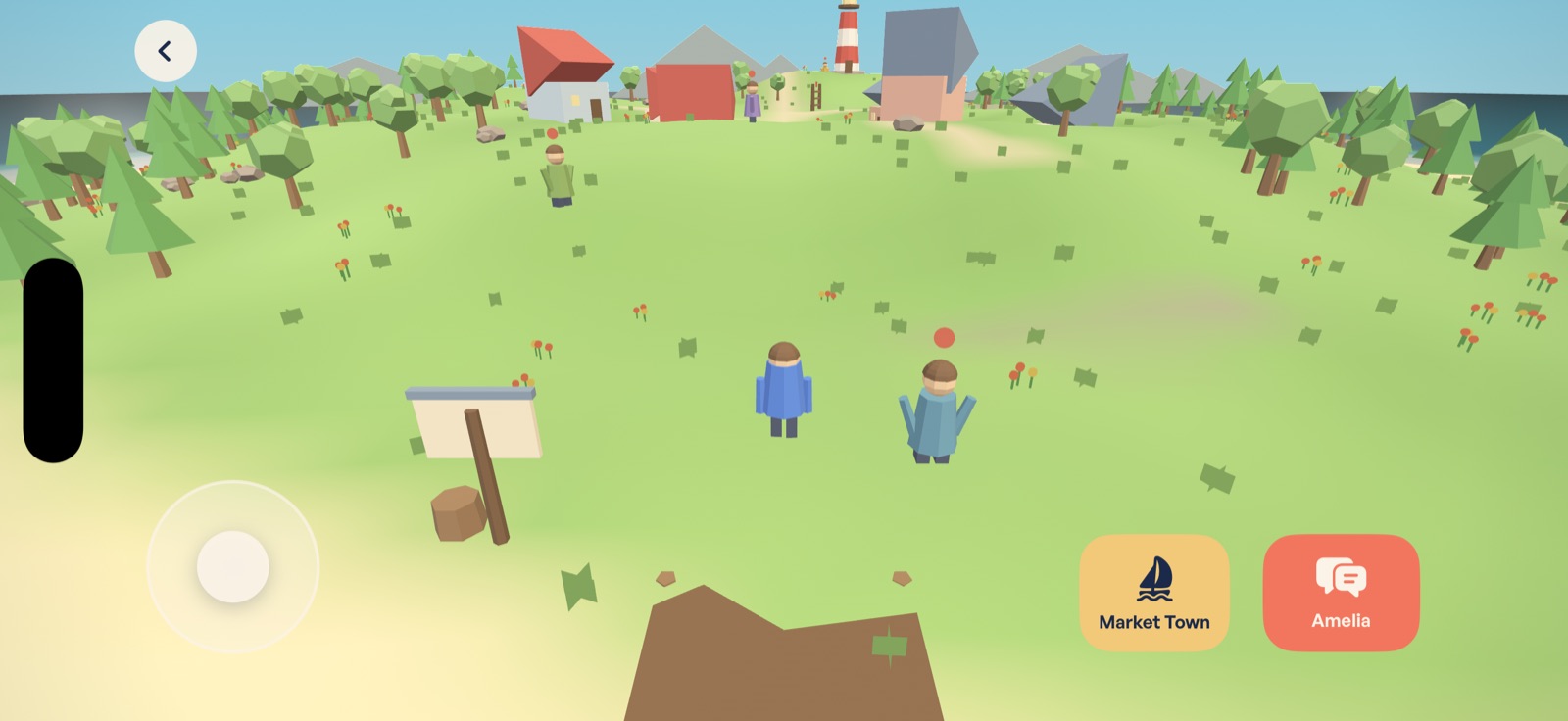
Harbor Village (A1). The world plays in landscape; the rest of the app stays portrait.
Walking to the baker to practise food words is a reason to come back tomorrow. A to-do list isn't.
Six islands with terrain, roads, buildings and vegetation. You walk with a joystick, or tap the ground to go there.
Everyone in the world has their own lesson. You walk up, you talk, and you learn what that person knows: the baker food, the captain greetings.
Come back to an island and you can tell at a glance who you have already talked to, without opening a menu.
A short placement test — grammar, listening and a couple of spoken sentences — decides which island you start on. If you don't grant the microphone, it swaps those steps for listening ones and tells you so.
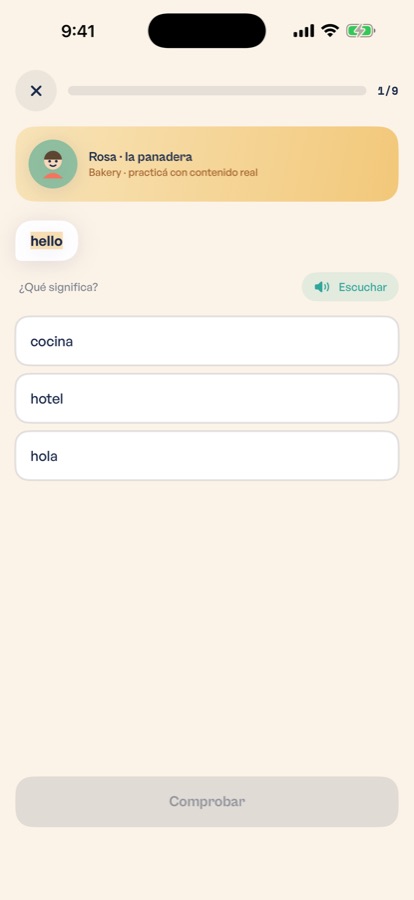
Their lesson opens: vocabulary, grammar, sentence building, listening, reading, writing and pronunciation. The characters in the world are the lessons — there is no separate menu.
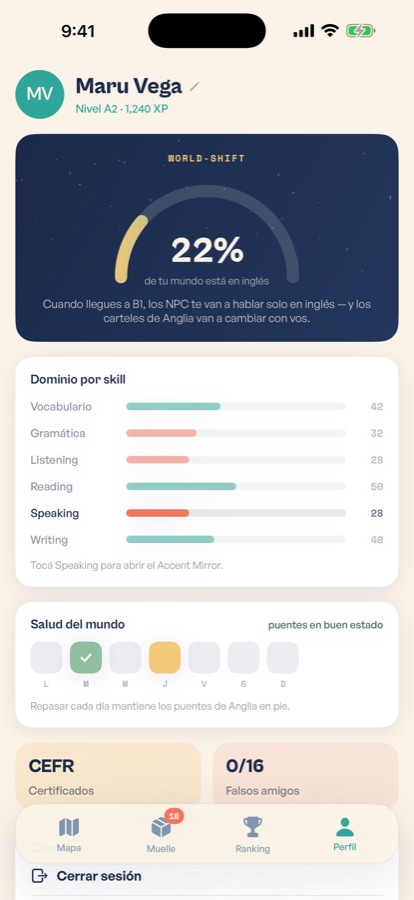
FSRS picks what you're about to forget. Each island's dock is where that gets repaired, and World-Shift shows how much of your world is already in English.
Plainly: the LinguaQuest certificate is not an accredited exam and is not equivalent to an official one. It's our own measurement against the CEFR framework.
Each island is a CEFR level and changes character with it: from the harbour village to the city, the campus, the financial capital and the snowy peak.
FSRS, the same engine on the web and on the phone. What you review in one place counts in the other, because it's the same account and the same state.
All the A1→C2 content ships inside the app. The account only exists to sync.
Accent Mirror listens to how you say it and flags the sounds that give Spanish speakers away. Recognition happens on the device.
As you progress, the people of Anglia speak to you more and more in English, and the signs change with you.
You come in as a guest. If you later want your progress on another device, you add an email and a password.
Two honest notes. The microphone is optional: without it the app still works and the placement test says so, and we don't store your audio. And the app's own interface is in Spanish — English is what you learn here, not what you navigate in.
It runs in the browser right now, with nothing to install. The iOS app is coming soon.
Try it in the browser